


Managing water utilities is about more than just tracking usage and generating bills. Utility companies must navigate regulatory requirements, aging infrastructure and customer expectations to deliver accurate billing services. Without the right utility management systems in place, how can your customers be sure they’re getting billed for the proper amount of water usage? How can you ensure notices are sent out on time and bills are delivered to the correct customer?
Effective utility management involves careful planning. With over 240,000 water main breaks annually, utility companies must invest in modern technology to avoid revenue loss and improve operations. Learn what water utility management is and use these strategies to stay compliant as you stabilize your operation.
Water utilities management software covers the systems and workflows required to bill accurately, track service activity, communicate with customers, and maintain compliance. A water utilities management system can reduce errors and staff workload by centralizing billing, service orders, notifications, and reporting in one platform.
Table of contents
Water utility management is the sector that oversees water treatment, delivery and billing for people and companies who need water. Management groups juggle infrastructure, water quality, customer service and financials. It’s a complex sector that delivers essential water to communities while working to keep water sources viable.
Water utilities services cover water used for dozens of purposes, including:
Water utility management can be broken down into the Effective Utility Management (EUM) framework. The EUM covers core principles for managing and delivering water, which include:
Managing water utilities means handling constant challenges. Before tackling your biggest obstacles, you need to break down what they are. Water utilities are currently facing these main challenges:
U.S. water network pipes are 45 years old on average. Our water systems are operating on decades-old pumps and pipes. Water infrastructure is often kicked down the road due to its cost, leading to older systems that are more likely to fail. Without proper financial planning, utilities may struggle to upgrade when they need to. As infrastructure ages, the replacements become more expensive and intensive. Utilities groups must strategically upgrade water systems to avoid greater water and financial losses.
Utilities companies are constantly balancing water expenses with customer financial collection. Inaccurate metering, slow revenue collection and late or unpaid bills can limit your budget. Management companies need to speed up collection times and optimize water metering. With utility billing software and updated technology, they can simplify cash flow management.
The age of smartphones has brought an expectation of constant connection. People expect digital billing options, self-service portals and real-time account access. Gone are the days of paper mail or walking to the bank. Utility management that still relies on outdated, manual processes might face slow collection rates and unhappy customers. Plus, handling paperwork manually increases administrative workloads and expenses.
Water utility operations break down when key tools are disconnected. A strong water utilities management system should connect:
Utility management services are critical for our communities. However, facilities must start planning in advance for water-related challenges. From current consumer debt to the expected $470 billion it will cost to replace aging infrastructure, companies need to adopt water management strategies that improve service for today and tomorrow.
Traditional on-premises billing systems limit your storage abilities and efficiency. With so much data to monitor, operating only on-site is impractical. Cloud-based utility management software streamlines your water management services. The cloud model allows your operation to scale storage up or down as needed without maintaining data centers yourself.
Access your software from anywhere, making it easy to oversee operations. Staff can easily manage accounts from secure devices so you can handle customers faster. Cloud-based software even seamlessly integrates with your municipal websites and existing systems. Just pay for the service level you need without large upfront investments or broken integrations.
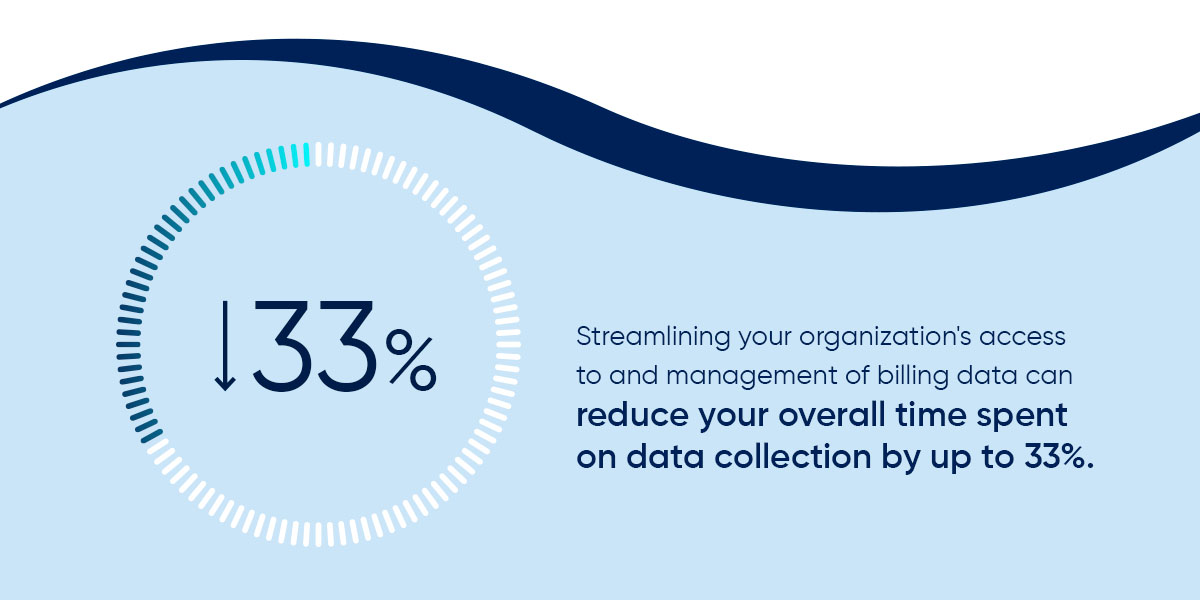
Streamlining your organization’s access to and management of billing data can reduce your overall time spent on data collection by up to 33%. One way to do this is by adopting a utility billing software that captures data automatically so bills are more accurate and timely without the need for manual inputting and validation. This will also simplify the payment collection process, improving the customer experience and increasing the chances of on-time payments.
Look for software with the following features to enhance your utility management system:
You might think cyber attackers are only after data from the financial or technology industries. However, U.S. utilities have seen a 70% increase in cyberattacks recently. Utility groups often have outdated software, making them easy targets for attackers.
Utility companies must invest in secure data management practices to protect their infrastructure data, billing records and meter readings. They should use software hosted at Tier-4 data centers, combined with encryption and multi-factor authentication. These measures help protect customer information and keep their operations compliant with data privacy regulations.
Unexpected incidents are par for the course in water utilities. Extreme weather can burst pipes, while contamination events can affect water quality. Utility companies must have proactive incident management strategies in place to defend their infrastructure. Implement monitoring tools to monitor equipment readings and water system issues. Use regular maintenance schedules to maintain systems and avoid breakdowns. Finally, create detailed, regularly updated response plans to stay ready for when emergencies happen.
The U.S. faces constant concerns around water. Water shortages and lack of clean drinking water challenge utilities management. Utilities groups must practice water conservation themselves and push sustainability to their customers. Smart metering systems and usage-based alerts can help customers track their water consumption. Your company can also promote conservation initiatives with education materials. Offer rebates for saving water or use water allocation policies to conserve water.
Water utilities must follow local, state and federal regulations around water quality standards and employee safety. Failure to maintain water cleanliness or financial reporting standards can lead to penalties from different levels of government. Make sure you’re using billing software that makes it easy to bill customers and track their finances. You’ll simplify the administrative process and make compliance a breeze.
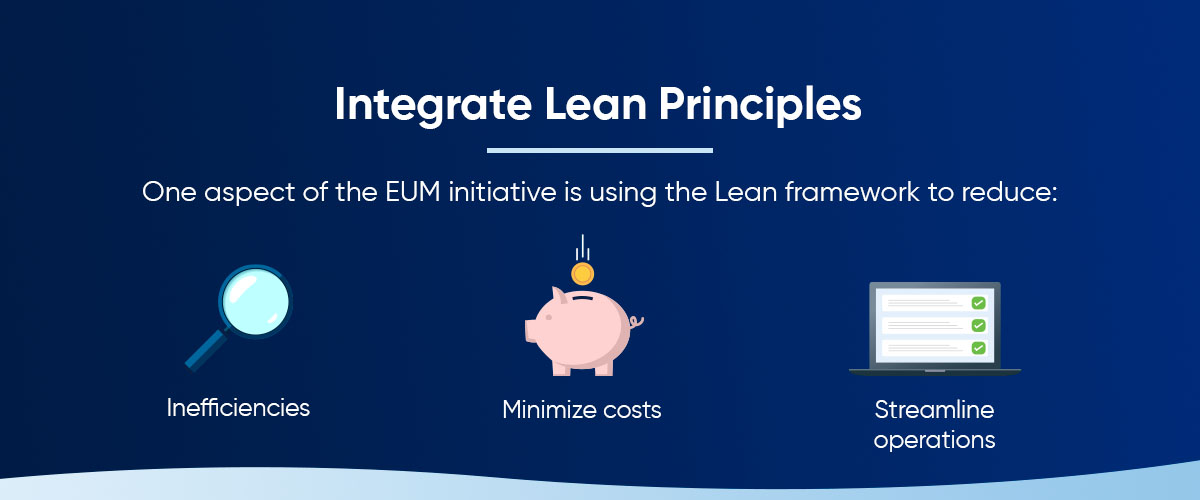
One aspect of the EUM initiative is using the Lean framework to reduce inefficiencies, minimize costs and streamline operations. In one case study, the Charleston Water System in South Carolina saved $1.3 million annually and was able to treat more than 2 million additional gallons of water each day using this modality.
The idea of this framework is to make changes to “waste” activities, which are those that may seem small but ultimately take attention and resources from higher-priority actions. They fall under the “DOWNTIME” acronym:
This approach helps free up employees, capital and resources you can divert to more critical areas of operation, including customer relations. You can also use the metrics you collect during this process to make more timely, data-driven operational decisions.
One Lean technique is to implement changes in small increments, such as a two-day plan for improving a specific area of waste. The EPA has outlined several additional methods within the Lean framework worth exploring, such as total productive maintenance and Standard Work.
Outdated infrastructure will eventually fail. As it fails, it will need more frequent repairs. These constant repairs lead to water delays for customers and increases in expenses. Evaluate your budgets and develop a plan for infrastructure modernization. Replace water systems in sections, concentrating on priority areas. This strategic replacement ensures your infrastructure gets updated without overwhelming your financials all at once.
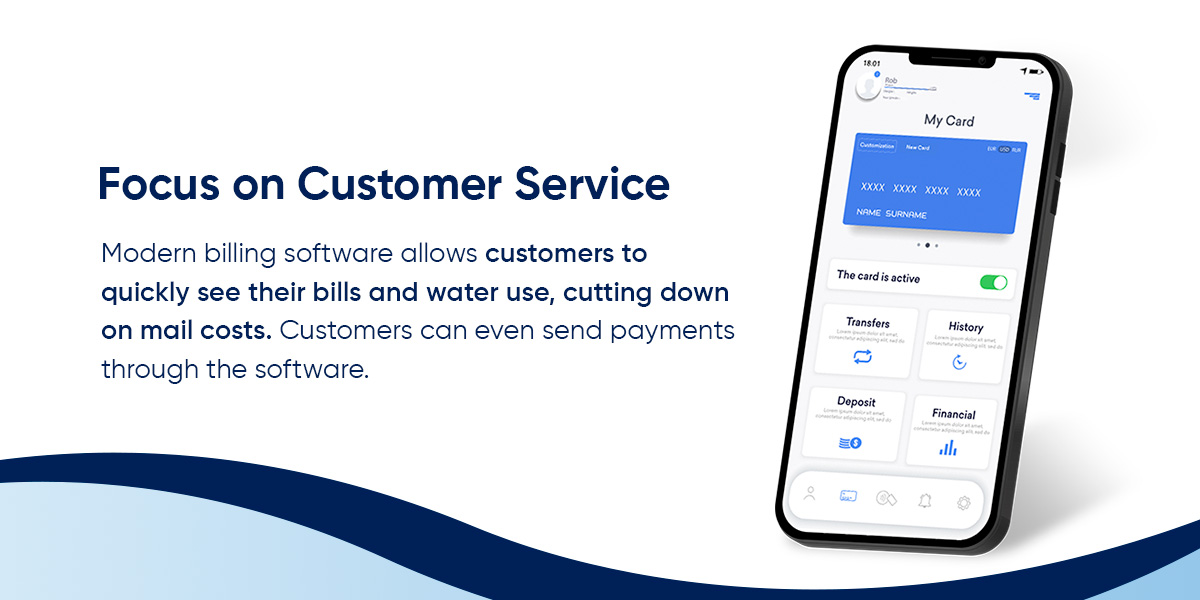
The harder it is to pay a bill, the more unhappy your customers will be. If customers have to travel to your main offices and pay in person, you limit their convenience and accessibility. Modern billing software allows customers to quickly see their bills and water use, cutting down on mail costs. Customers can even send payments through the software, which makes it easier for them to pay on time.
An intuitive, easy-to-use customer portal offers more than convenience for members of your utility district — it can save your organization significant amounts of time and resources. When customers have a single place to view their usage and billing information, it lowers call center traffic, allowing your team to focus on more important areas of operation. It also reduces water waste by allowing users to receive possible leak notifications and compare their usage rates from month to month or even how their usage differs from their neighbors.
If you’ve already got a customer portal, take full advantage of it through these tips:
Another way to implement better customer-facing tools is by revamping your website to provide more valuable features for the user, such as multichannel communication and the ability to send out mass updates and alerts. Muni-Link’s WebPresence eliminates the need for technical know-how — our simple, intuitive system makes it easy to customize and update your website without all the hassle of complicated web design.
Effective water utility management starts with the right technology. Muni-Link’s utility billing software simplifies billing, improving customer satisfaction and making your job easier. We partnered with municipal authorities to create a solution that works for your needs. Our cloud-based software can be customized to local county requirements. With automated billing, real-time account access and secure payment processing, your team can streamline operations easily.
Modernize your utility billing today! Request a demo online to see how Muni-Link can help your services.

