


Are manual processes draining your municipality’s resources while your customers grow increasingly frustrated with outdated payment options? For water and sewer utility providers, choosing the right billing software is a technological upgrade that’s also a strategic investment that enhances operational efficiency, staff productivity and customer satisfaction. It’s common today for customers to prefer using digital payment solutions when making bill payments, but a lot of utilities still struggle with legacy systems that can’t meet modern expectations.
To help you make an informed decision that benefits both your organization and customers, let’s explore the essential features to consider when selecting software for a water and sewer billing management system.
Before diving into specific features, it’s important to understand your organization’s unique requirements. The right utility billing software should align with your operational goals and address your specific challenges.
The size of your utility operation significantly impacts the best utility billing software for your needs. Small utilities with fewer than 50 customers may require simple systems with basic account management, meter management and billing features. Meanwhile, midsize utilities with 50 to 250 customers need more scalable solutions that can grow with their customer base and potentially manage multiple service locations.
For larger utilities with 250 or more customers, more comprehensive systems are necessary, with advanced features for managing billing scenarios, integrations and extensive reporting capabilities.
Your specific utility services determine which municipal utility billing software will deliver the most value for your organization:
How your software is deployed affects accessibility, maintenance and long-term costs. Consider these options based on your IT resources and budget priorities:
The utility billing software landscape is evolving rapidly. Being aware of current trends can help you select a solution that will remain relevant for years to come:
When evaluating utility billing systems, prioritize these key features to maximize your investment’s value and address your most pressing operational challenges.
With efficient billing processes in place, your next priority should be empowering customers to manage their own accounts. Look for software that automates the entire billing life cycle, from meter reading to payment processing. It should include features that save time and enhance customer satisfaction by removing the potential for human error. Automatic bill generation based on consumption data and support for multiple payment methods, including credit or debit cards, ACH and electronic checks, are essential features. Software that integrates scheduled payment options, sends automated late notices and payment reminders and adjusts to flexible rate structures — including tiered pricing and time-of-use rates — can simplify your billing operations while improving the customer experience.
Invest in software that offers a robust customer portal to significantly improve satisfaction while reducing staff workload:
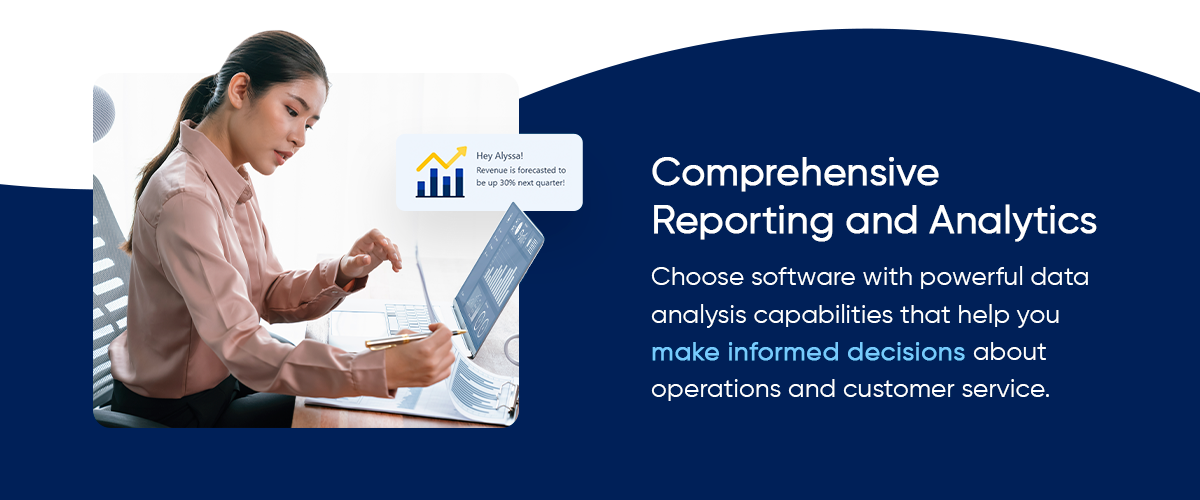
Choose software with powerful data analysis capabilities that help you make informed decisions about operations and customer service. Look for customizable reports for revenue, consumption and collections. Trend analysis for usage patterns and financial performance metrics can help you make more accurate projections.
You can also benefit from delinquency tracking, regulatory compliance reporting and export capabilities for further analysis.
Effective utility billing doesn’t happen in isolation. It requires coordination across multiple systems. Select software that seamlessly connects with other critical systems to create a unified operational ecosystem:
Data protection is vital in today’s digital landscape. Prioritize software with robust security measures that:
Modern cloud solutions provide significant operational advantages while minimizing IT overhead costs. Look for platforms offering:
Your utility has operational requirements that off-the-shelf solutions may not address. Choose software that is flexible enough to adapt to your specific needs. This could include customizable rate structures and billing cycles, flexible service fee configurations and custom data collection fields and reporting options.
Once you’ve identified software with the essential features above, consider these additional factors to ensure a successful implementation and long-term partnership.
Look beyond the initial price tag to understand your complete investment, including:
The company behind the software is as important as the features themselves. Evaluate potential partners based on:
Request detailed information about the transition process and future growth capacity, such as the typical implementation time frame and data migration process, as well as if training resources and go-live support are available.
It’s also important to gauge its ability to handle increasing users, customers and transaction volumes.
What is the use of billing software? Selecting the right utility billing software impacts your operations, customer satisfaction and bottom line. By prioritizing utility billing system features like cloud-based architecture, comprehensive customer self-service, seamless integrations and robust security, you can transform your billing process from a necessary administrative function into a strategic asset.
The right software partner provides technology, expertise, support and helps you build a roadmap for continued improvement. As customer expectations continue to evolve, having a flexible, feature-rich billing system becomes increasingly important for maintaining competitive advantage and operational excellence.
Ready to level up your utility billing process? Schedule a demo with Muni-Link today to see how our cloud-based utility billing software can streamline your operations, enhance customer satisfaction and prepare your organization for the future.